If You Haven’t Cried Lately, Your Body Is Still Holding Something
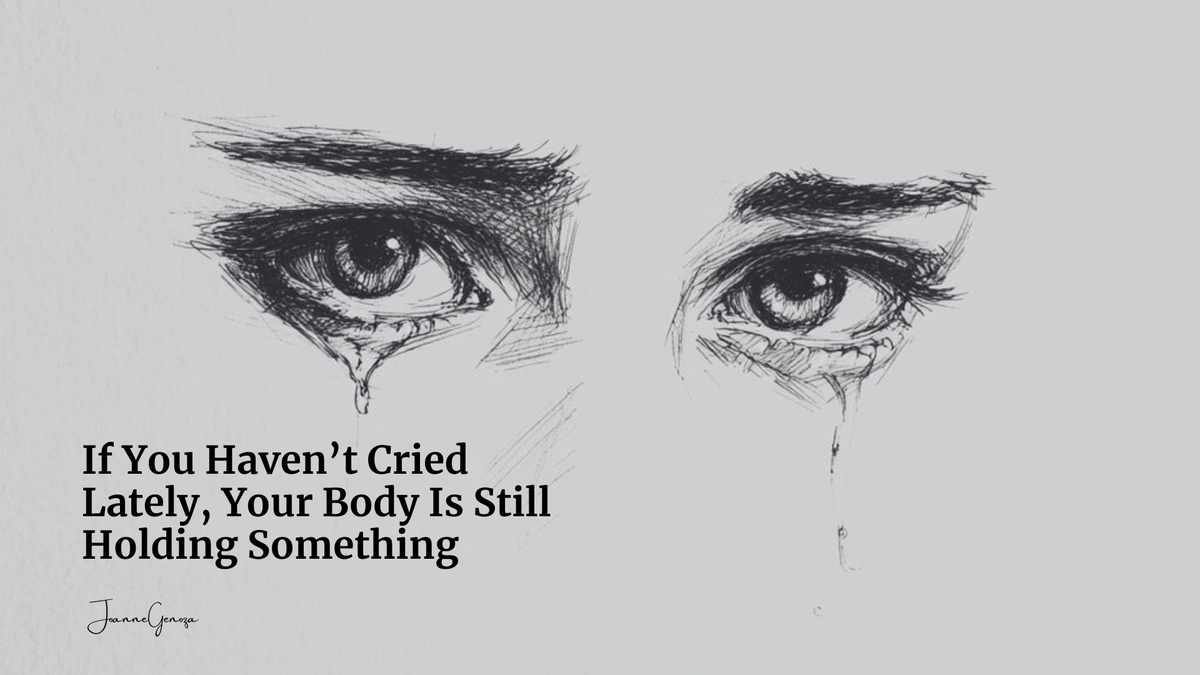
When was the last time you let yourself cry, without apologizing for it?
Somewhere along the way, we learned that tears mean something is wrong. That crying is inconvenient. Unprofessional. Embarrassing. A weakness that needs to be managed, or silenced.
When a baby cries, we understand instinctively: something is needed. Safety. Touch. Presence. But when adults cry, we rush to fix it. And we do the same to ourselves.
A few days ago, I was sitting on my bed on the 46th floor, facing a wide glass window. Manila stretched endlessly in front of me, lights pulsing, buildings breathing, the city alive.
A single tear slid down my cheek. Then another. And then, without warning, my body opened. A cry rose from my belly, tore through my chest, and burst out of my mouth in a raw, animal sound. Not pretty. Not controlled. A waterfall followed.
Was something wrong? No.
Was I facing a crisis? No.
I was simply processing being human.
Here is what most people misunderstand about crying: We don’t cry only because something is broken. We cry because something is moving.
If you live heart-led… If you allow yourself to be touched by life… If you create, lead, love, and choose from devotion rather than numbness… You will feel everything.
I once believed that opening my heart fully would mean feeling only love, the soft, cinematic kind we see in romantic movies. I was wrong. Love is full presence. Full acceptance. It includes grief, tenderness, longing, joy, and awe. All the flavors of life.
When you live this way, you hear what is unspoken. You feel beyond words. You sense the soul beneath the form. And your body requires a way to metabolize all of it.
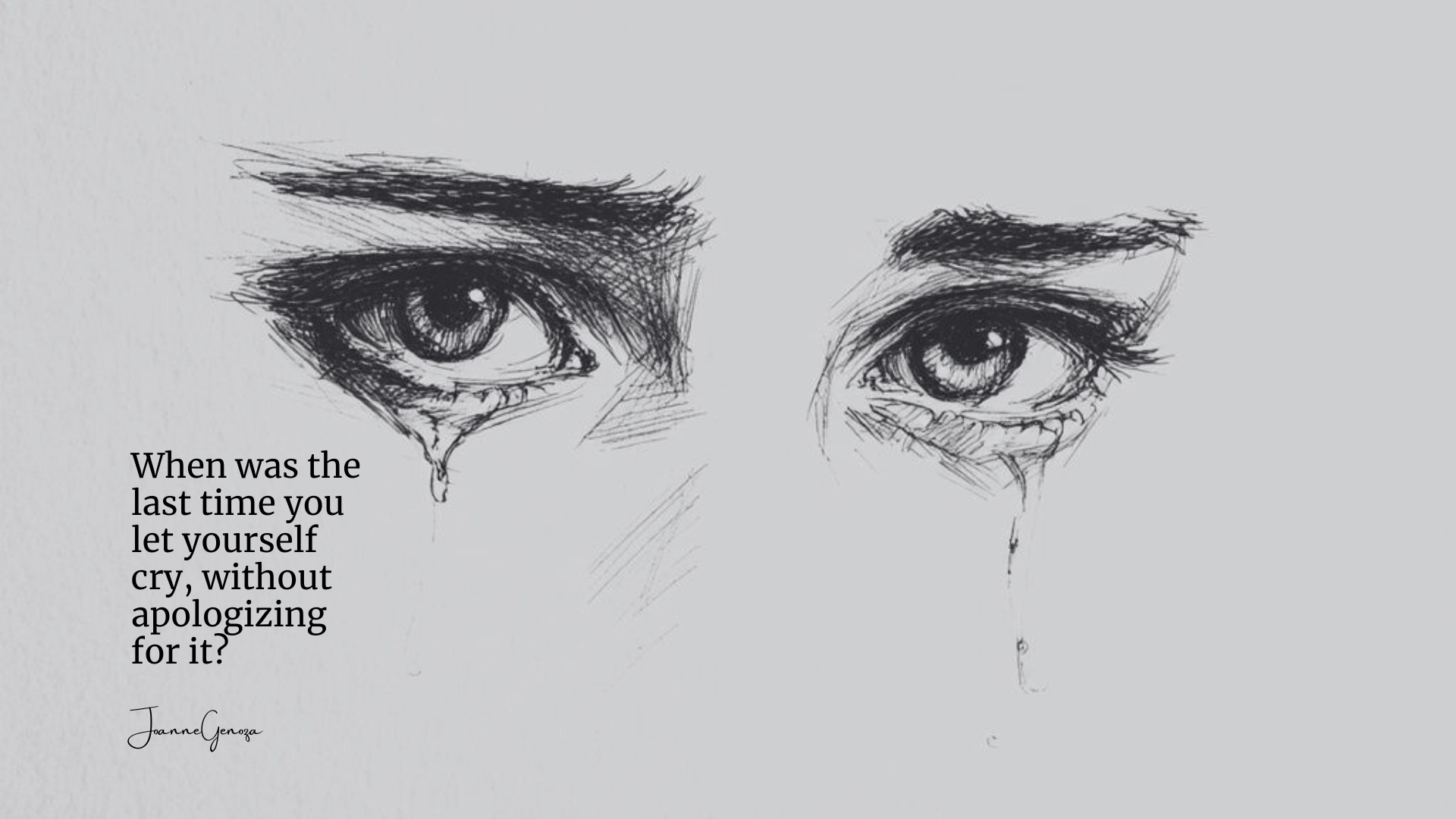
For weeks in my studio, my work looked like this: People crying in front of me. Apologizing. Confused. Ashamed.
“I don’t know why I’m crying.”
And I would simply say: “Go on. I can hold this.” No fixing. No interpretation. No story. Because crying is not a problem, it is a regulatory function. When emotions are not processed, they lodge themselves in the body. Organs hold memory. Fascia holds history. Unfelt emotion becomes tension, fatigue, anxiety, disconnection.
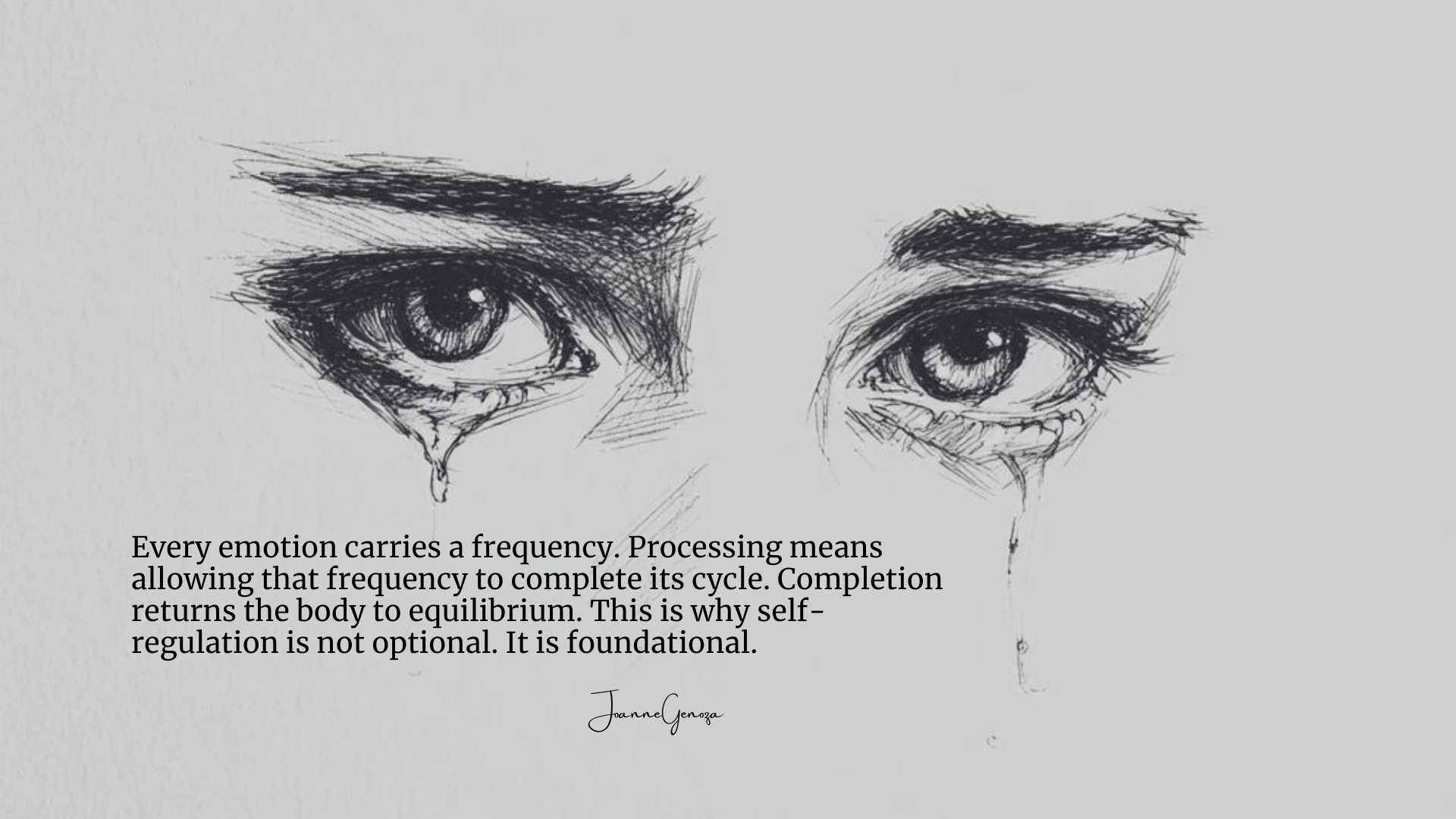
Every emotion carries a frequency. Processing means allowing that frequency to complete its cycle. Completion returns the body to equilibrium. This is why self-regulation is not optional. It is foundational.
 Joanne Genoza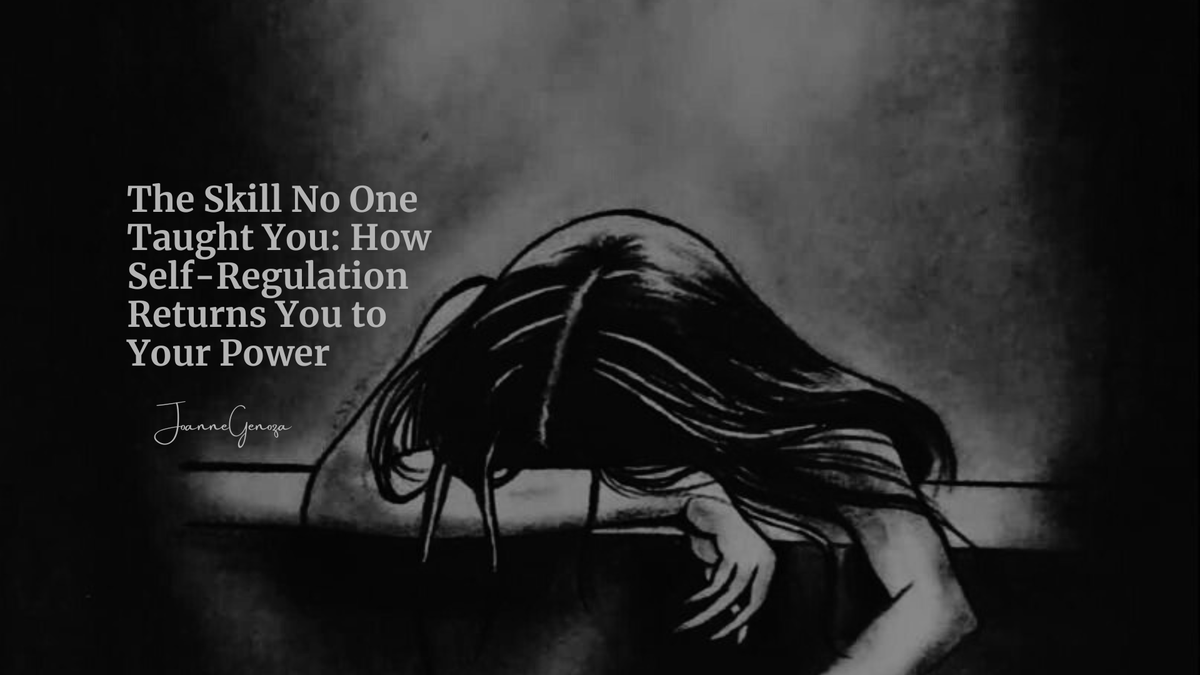
In a world moving too fast, crying is a radical act of remembering how to be human.
I am intentional about where and how I let myself cry. I cry while walking. While driving. During meditation. On my yoga mat. Before sleep, to empty the day from my body.
I don’t cry in front of my team, not because tears are wrong, but because leadership requires containment. Their nervous systems lean on mine. This discernment is regulation.
My work is not to fix you. My work is to hold a field where what is heavy can move, so your clarity returns. When emotions are processed, you begin to see what is yours… What never was… What matters… And what no longer does.
And suddenly, the thing that’s been calling you forward no longer feels heavy.
If you’ve been carrying something quietly. Something that clouds your perception, delays your movement, or tightens your chest. I offer private 1:1 sessions where we don’t bypass intensity… We metabolize it.
Many clients say,
“Joanne, this feels like a lot.”
And I say,
“Good. Let’s process it.”
If your nervous system is ready for clarity, regulation, and grounded expansion, you may reach out to apply.
Email me directly: genozajoanne@gmail.com
Share what’s been heavy. We’ll begin there.
With love,
Joanne Genoza
 Joanne Genoza
 Joanne Genoza
 Joanne Genoza